
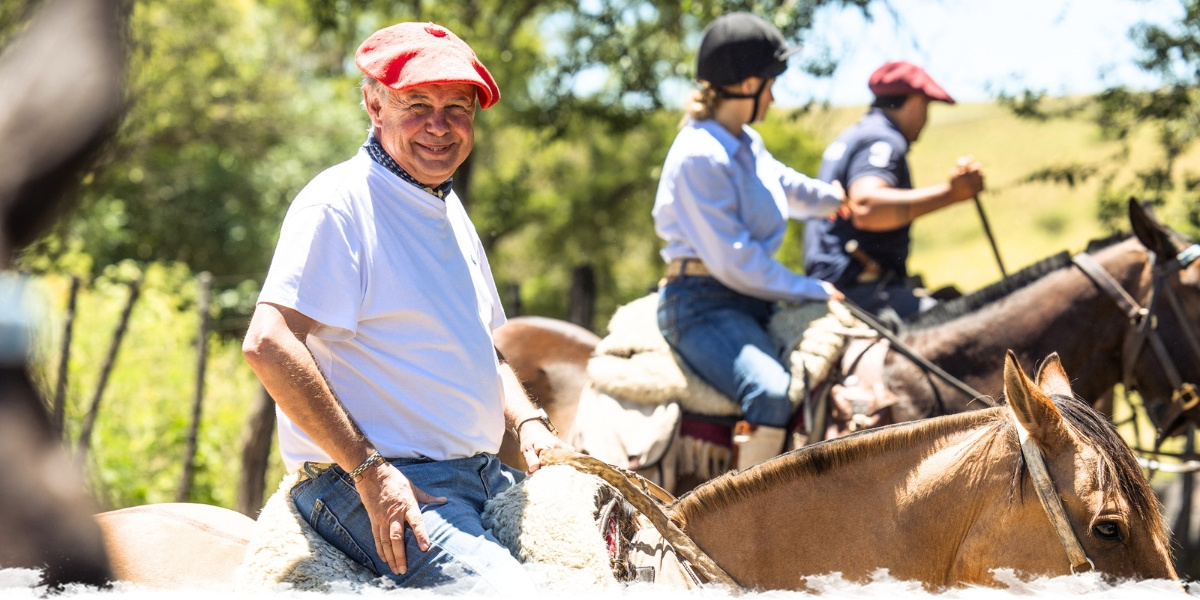
A Catch Up with... Kevin Begg from Estancia Los Potreros
Elizabeth from Equus Journeys quizzes Kevin Begg from Los Potreros about the wine, cattle and wildlife at the estancia (she's also keen to know about his travel plans and least favourite parts of the job!)
1. Can you remind us about the history of the estancia and how your family came to be in Argentina?
Estancia Los Potreros has been in my family for four generations, and it is very much a family home rather than simply a cattle and tourism business. My ancestors in the 19th century came to Argentina and fell in love with the country, the people, the landscape and, above all, the way of life. William Grearson arrived in Argentina on an organised immigration from Scotland on the 8th of August 1825! I grew up with the estancia as a central part of family life. Although I spent many years working abroad in finance, Argentina always pulled me back.
In 2001, during Argentina’s financial crisis, I had to make a decision about whether to leave or stay. I chose to stay. So "LosPots", as the estancia is affectionately called, is not something I created from scratch; it is something I inherited, continued and, I hope, improved. My role is really that of a guardian, looking after the land, the horses, the cattle, the gaucho traditions and the family history, while sharing it with guests in a respectful and genuine way.
2. There are of course lots of estancias in Argentina. What makes Los Potreros different or stand out?
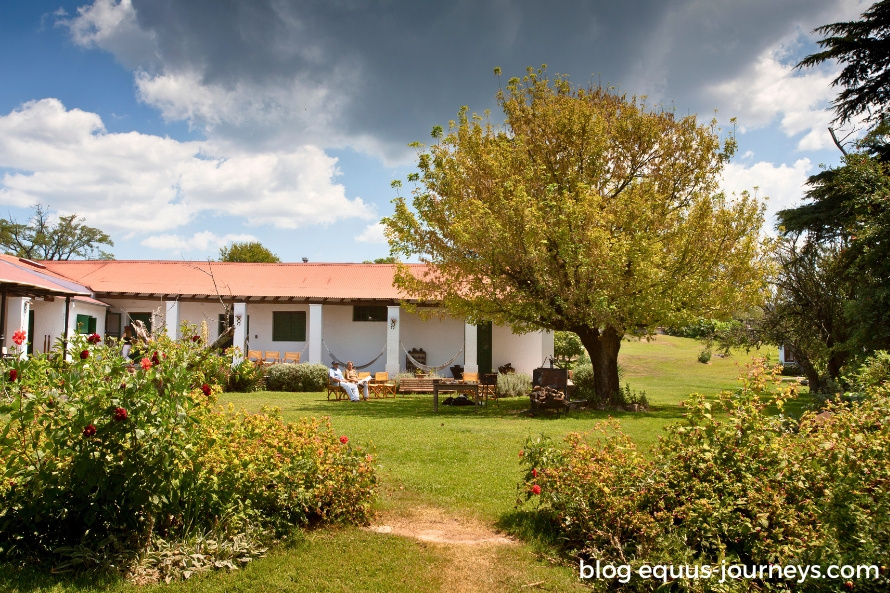
Argentina has many beautiful estancias, each with its own character. I think what makes LosPots stand out is that it is still a real working estancia, but also a very personal and intimate place to stay. We are not a large hotel dressed up as an estancia. Guests are welcomed into a family home and into a way of life. The riding is a huge part of the experience, but it is not just about hours in the saddle. It is about understanding the landscape, the horses, the cattle, the gauchos, the food, the pace of life and the traditions that still exist here.
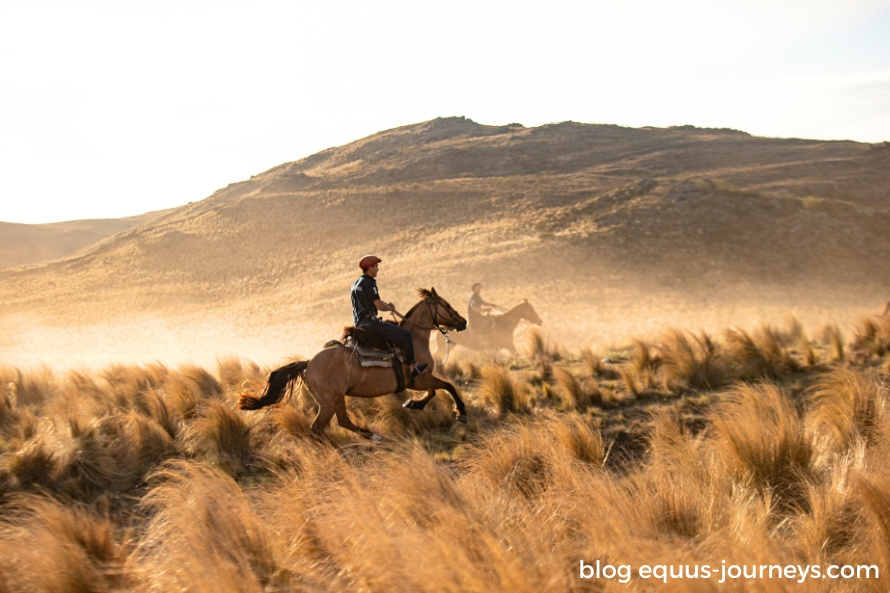
Another important difference is the variety. We are in the hills of Córdoba, not on the flat pampas, so the riding is very varied: open grasslands, rocky outcrops, valleys, streams, woodland and wonderful views. Guests can ride with gauchos, help with cattle work, enjoy long canters, swim in natural pools, learn about Argentine beef and wine, and then sit around the table in the evening feeling part of the place. I think people often come expecting a riding holiday and leave feeling they have experienced a little piece of Argentina.
3. Tell us about Córdoba and its landscapes and wildlife. What are the highlights?
Córdoba is one of Argentina’s great hidden treasures. Most visitors know Buenos Aires, Patagonia, Mendoza or Iguazú, but Córdoba is less obvious and that is part of its charm. The estancia lies in the Sierras Chicas, a beautiful landscape of rolling hills, open grassland, rocky ridges, streams and native woodland. It is a softer landscape than Patagonia, but it has enormous variety and a very special light. It is wonderful riding country because every day can feel different.
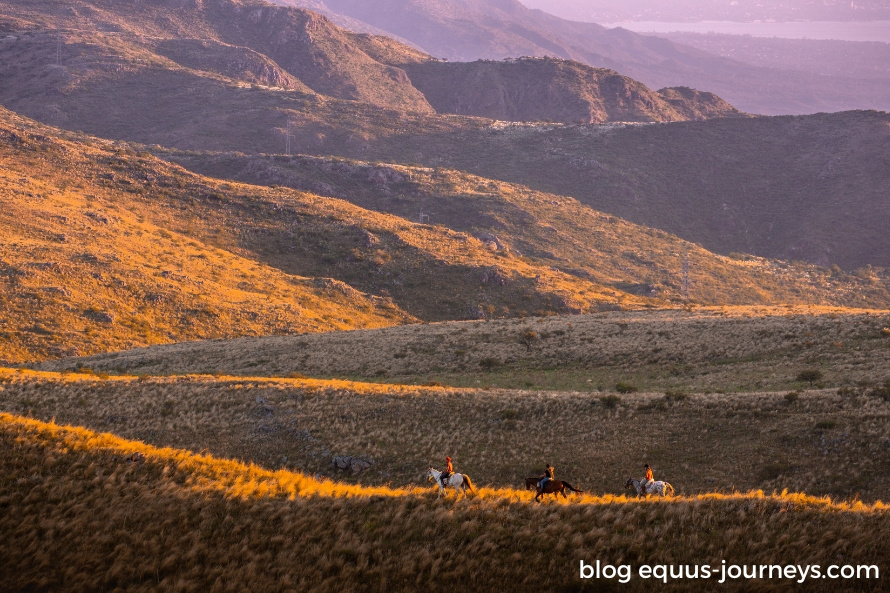
The wildlife is also a highlight. We regularly see condors, owls, foxes, hares, vizcachas, wild boar and many different bird species. The birdlife is especially good, from small colourful hummingbirds to caranchos (crested caracaras) and vultures soaring above the hills. The flora changes with the seasons, and after rain the hills become incredibly green. For me, the great highlight is the sense of space. You can ride up to a ridge, look across the sierras, and feel very far from the modern world, even though Córdoba city is not so far away.
4. What is your approach or motto when it comes to running a guest estancia?
My approach is simple: we want guests to feel that they are staying with us, not just staying at the estancia. I want people to leave feeling that they have experienced something real. Of course, we want them to be comfortable, well fed and well looked after, but the heart of the estancia is not luxury in the conventional sense. It is authenticity, warmth, good horses, good food, open spaces and human connection. We want guests to see and feel what life here is really like, the beauty, the work, the humour, the traditions, the dust, the horses, the asados, the long conversations and the quiet moments. The estancia motto is “Nil Sine Amicitia”: Nothing without Friendship.
5. How do you ensure guests get an authentic experience and the chance to really connect with Argentine life and culture?
The key is that we do not separate guests from daily life at the estancia. They ride the same land, meet the people who live and work here, eat the food we eat, and take part in the traditions that matter to us. We do not want to put on a “show”. The best moments are often spontaneous, helping with something that needs doing, joining a mate (Argentine Tea) break, watching a horse being handled, or listening to a gaucho explain something in his own way.
Authenticity comes from continuity. These traditions are not museum pieces; they are still part of daily life. Our job is to let guests into that world.
6. I understand that the food and wine is a highlight at Los Potreros. What is special about it?
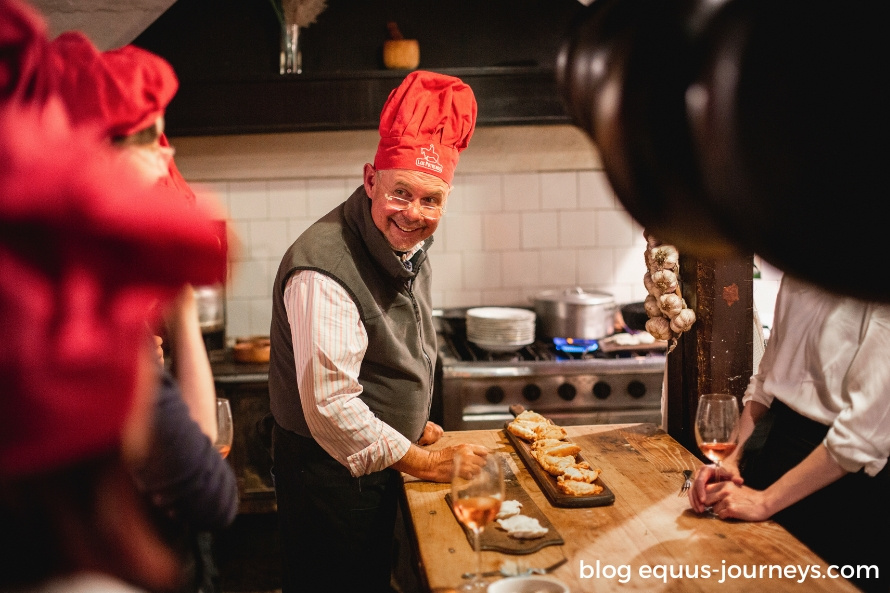
Food and wine are central to Argentine hospitality, and they are certainly central to life at LosPots. The beef is very important to us. We raise traditional Aberdeen Angus cattle on the estancia, and our beef is one of the things guests remember most. We use both wet-aged and dry-aged beef, although personally I have a great affection for wet-aged beef when it is done well. The asado is not just a meal; it is a social ritual. Guests are encouraged to come and watch, ask questions, take part and understand the different cuts and traditions. We also try to use local and seasonal ingredients wherever possible. Córdoba has wonderful produce, and we want the food to feel rooted in the place. The cooking is generous, home-style and Argentine, rather than overly formal.
The wine is another highlight. Argentina is now known internationally for Malbec, but there is much more to discover: wines from Mendoza, Salta, Patagonia and other regions. We enjoy introducing guests to different Argentine wines and helping them understand how diverse the country is. My wine cellar is open to all guests to look, choose and open any bottle they wish at no extra cost. The table is one of the most important places on the estancia. It is where the day comes together.
7. Can you tell us about the cattle, how many you have, what their life is like, and how much cattle work guests can get involved with?
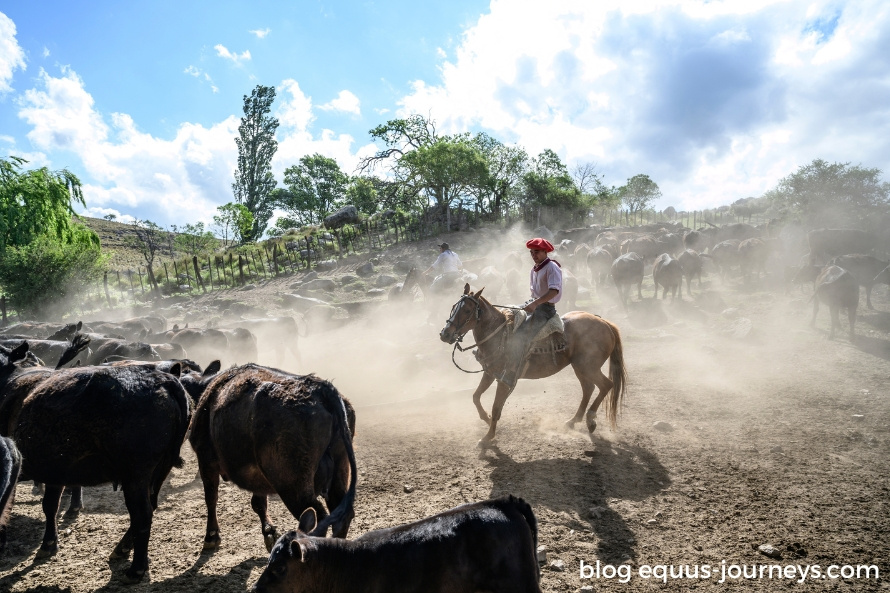
We raise traditional Aberdeen Angus cattle, which are very well suited to our land and climate. The exact number varies according to the season and the year, but the cattle are an important part of the estancia and not just a decorative backdrop. At the moment, we are running approximately 400 breeding cows plus bulls, heifers, calves etc. Their life is very natural. They live out on the hills and pastures, grazing freely and moving across the land according to the season and the availability of grass and water. Because the estancia is hilly, cattle work can be quite active and interesting. It is very different from working cattle on flat land. When the timing is right, guests can help with real cattle work: moving cattle, checking them, bringing them in, feeding salt, or simply riding alongside the gauchos and seeing how they work. We never manufacture activities just for guests, but if there is genuine work to be done and it is safe and appropriate, guests are very welcome to be involved. For many riders, this is one of the most memorable parts of their stay because it gives purpose to the riding and a real insight into estancia life.
8. How much time do you personally spend at the estancia? Do you also get to travel much?
I spend a great deal of time at the estancia. It is my home, my work and very much my life. Even when I am travelling, I am always connected to it in some way. The estancia experience is hosted so I will always try to be at the estancia when we have guests. On the odd occasion a member of my family may host but always with my incredible team led by Georgia (Beech) my General Manager. I do travel, partly for work and partly because I enjoy meeting people and seeing how other rural tourism and conservation projects operate. I spend time in Europe, especially the UK and Spain, and I also travel within Latin America for tourism, equestrian events and meetings. I am very interested in other places that combine hospitality, horses, conservation and culture. As for riding holidays, I am lucky because in some ways I live on one. But I do enjoy visiting other horse cultures when I can. There is always something to learn from the way people in different parts of the world work with horses.
9. How important are sustainability and responsible travel?
Sustainability and responsible travel are extremely important to us. For an estancia like LosPots, it is not an abstract idea. If we do not look after the land, the horses, the cattle, the water, the people and the culture, then we lose the very thing guests come to experience. We have invested in solar energy, including new solar panels to reduce our reliance on fossil fuels. We work hard to restore and maintain traditional buildings, rather than replacing them with something that has no connection to the place. We support local employment and local suppliers as much as possible, and we want tourism to strengthen the local community rather than replace it. We sponsor two local schools. Responsible travel also means cultural responsibility. Gaucho culture should not be reduced to a costume or a performance. It is a living tradition, and we try to present it with dignity and respect. For me, sustainability is about continuity: making sure that the estancia can continue as a working landscape, a family home, a place of employment, a home for horses and cattle, and a place where guests can experience something genuine. We are proud members of “The Long Run”.
10. Tell us about the horses. What is special about them, how do you train them, and which one is your favourite?
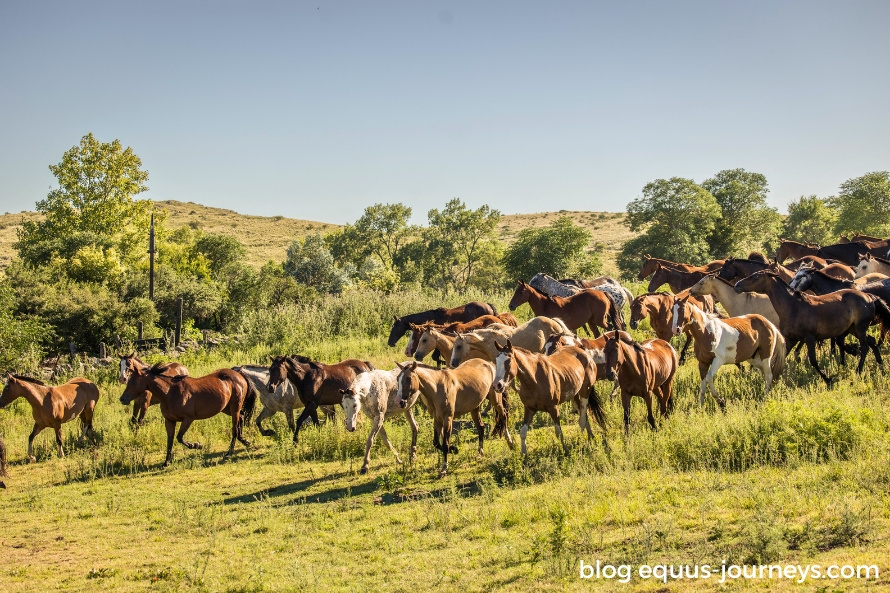
The horses are the heart of Los Potreros. We breed both Criollos and Peruvian Pasos. We have a large herd, over 120 horses, and what makes them special is their character, their sure-footedness and their experience of the land.Our horses are not just trail horses following a fixed route. They are working horses, used to hills, cattle, open spaces, changing terrain and different riders. They need to be calm, intelligent, responsive and brave. A good estancia horse has to look after its rider but also be capable of doing a job. Training is patient and practical. The horses learn through time, consistency and experience. They are handled by people who understand them and who have grown up around horses. We do not want over-trained or mechanical horses; we want willing, balanced, sensible horses that enjoy their work.
As for a favourite, that is always a dangerous question! There are horses you admire for their ability, others for their kindness, and others because they have carried you through important moments. I probably have several favourites, depending on the day. And yes, I completely understand the charm of a Peruvian Paso but there is so much more to a horse than a breed. Our horses are different, but what they share is that wonderful feeling of partnership between horse and rider.
11. Can you tell us more about the non-riding activities at Los Potreros?
Although riding is central to the estancia, non-riders can have a very full and enjoyable stay. We often have couples or families where not everyone rides, and it is important that they also feel included. A non-riding day might include walking in the hills, birdwatching, relaxing by the pool, learning about the cattle and horses, helping with or watching an asado, reading in the garden, or simply enjoying the peace of the estancia. There are also opportunities to learn about Argentine food, wine, local history and rural life. Some people arrive thinking they need to be kept busy all the time, but after a day or two they begin to enjoy the rhythm of the place. The estancia is a wonderful place to slow down. You can sit with a coffee, watch the horses come in, listen to the birds, walk up to a viewpoint, or join the riders later for lunch or dinner. We try to make non-riders feel part of the same experience, not separate from it.
12. What do you love the most about your life at Los Potreros? And what do you love the least?
What I love most is the sense of purpose and continuity. Every day I feel connected to the land, the animals, the people and the traditions of the place. There is enormous satisfaction in seeing guests understand and appreciate something that means so much to us. I also love the small moments: early mornings, horses grazing, the sound of saddles being prepared, the smell of an asado, the light on the hills, conversations around the table, and seeing a guest have a moment they will remember for the rest of their life. What do I love the least? Like any rural life, there are constant challenges. Things break, weather changes plans, animals get sick, and nothing is ever quite finished. Running an estancia is not romantic every minute of the day. It is hard work, and you have to be patient. But even the difficult parts are part of the same life. I cannot really separate them.
13. Can you tell us anything about what’s in store for the estancia in the coming years?
We are always trying to improve but carefully. I do not want Los Potreros to become something too polished or too disconnected from its roots. In recent years we have worked on restoring buildings, improving staff housing, adding solar panels, improving the swimming pool area and continuing to invest in the horses and the guest experience. In the coming years, I would like to continue that process: better infrastructure, more comfort where it matters, and stronger sustainability, but without losing the feeling of a real estancia. We will continue to focus on what makes Los Potreros special. The aim is not to become bigger for the sake of it. The aim is to become better, while keeping the soul of the place intact.
More information:
To enquire about a riding holiday at Estancia Los Potreros, please visit our website or contact one of our travel advisors. You can email: info@equus-journeys.com or call us on +44 (0)1905 388 977.